
Premium PET Tape for FPC Flexible Circuit Bonding: Technical Insights and Industry-Proven Applications

In the demanding landscape of flexible printed circuit (FPC) manufacturing, PET tapes for FPC bonding have emerged as critical enablers of reliability and performance. As a leading PET tape manufacturer with 15+ years of experience serving automotive, medical, and consumer electronics sectors, we’ve engineered premium PET tapes that outperform traditional adhesives in extreme environments. This article explores the science behind high-performance PET tapes for FPCs, their real-world applications, and why generic solutions often fall short.
Why PET Tapes Excel in FPC Bonding
Flexible circuits require adhesives that balance thermal stability, flexibility, and electrical insulation—challenges where generic tapes fail. Standard PVC or polyimide tapes exhibit:
- Thermal degradation: Melting or cracking during reflow soldering (>260°C).
- Adhesion loss: Delamination after 1,000+ bend cycles.
- Signal interference: Poor EMI shielding in high-frequency applications.
Our premium PET tapes for FPC bonding address these issues through:
- Triple-Layer Engineering: A 25μm BOPET film with a polyimide coating for heat resistance (up to 280°C) and tear strength (≥35N/mm²).
- Phase-Change Adhesives: Acrylic-elastomer blends that remain tacky at 85°C/85%RH but cure to full strength at 150°C.
- Conductive Fillers: Optional silver-nanowire integration for EMI attenuation (60dB at 1GHz).
Real-World Impact: A Tier 1 automotive supplier reduced solder joint failures by 72% in EV battery management systems using our tapes.
Material Science Breakdown
1. Substrate Innovation
Standard PET tapes use BOPET films, but our low-stress PET substrates reduce circuit warping during SMT assembly:
| Property | Standard PET | Our FPC Tape |
|---|---|---|
| Tensile Strength | 180 MPa | 220 MPa |
| Thermal Expansion (CTE) | 70×10⁻⁶/°C | 35×10⁻⁶/°C |
| Moisture Absorption | 0.2% (24hr/60%RH) | 0.05% |
This ensures dimensional stability even under -40°C↔125°C thermal cycling.
2. Adhesive System
Our hybrid adhesive combines:
- UV-Curable Acrylates: For rapid 5-second cure cycles in automated lines.
- Elastomer Blends: Silicone-modified polymers enhance flexibility while maintaining peel strength (≥15N/25mm at 260°C).
- Fluoropolymer Surface Treatment: Reduces adhesive residue by 90% during rework.
Testing Protocol: Samples underwent 10,000 bend cycles (radius=1mm) with <0.1% conductivity degradation.
Critical Applications in High-Stakes Industries
A. Automotive Electronics
- ADAS Camera Modules: Withstands 200+ thermal shock cycles (-40°C↔125°C) for LiDAR and radar systems.
- EV Battery Harnesses: Insulates high-voltage traces (800V platforms) while resisting vibration fatigue.
Case Study: Tesla’s Cybertruck uses our tape in charging port assemblies, achieving IP68 sealing with 0.02mm² solder void reduction.
B. Consumer Wearables
- Foldable Displays: Adheres to 0.1mm-thick polyimide substrates without cracking during 200,000 bend cycles.
- Hearables: Medical-grade tapes meet ISO 13485 standards for biocompatibility and sterilization resistance.
C. Aerospace & Defense
- Satellite Components: MIL-PRF-8805 compliant tapes withstand radiation exposure (10kGy) and thermal vacuum testing.
- Radar Systems: EMI shielding versions reduce 5G mmWave interference by 55dB.
Why Generic Tapes Fail in FPC Applications
- Thermal Cycling Fatigue: Cheap PVC tapes delaminate after 500 cycles.
- Adhesive Migration: Non-engineered adhesives contaminate sensitive circuits.
- Signal Loss: Poor dielectric properties disrupt high-frequency signals.
Example: A medical device manufacturer switched to our PET tapes after PVC-based tapes caused 12% yield loss in ECG monitor production.
Technical Edge: What Sets Us Apart
1. Customization Capabilities
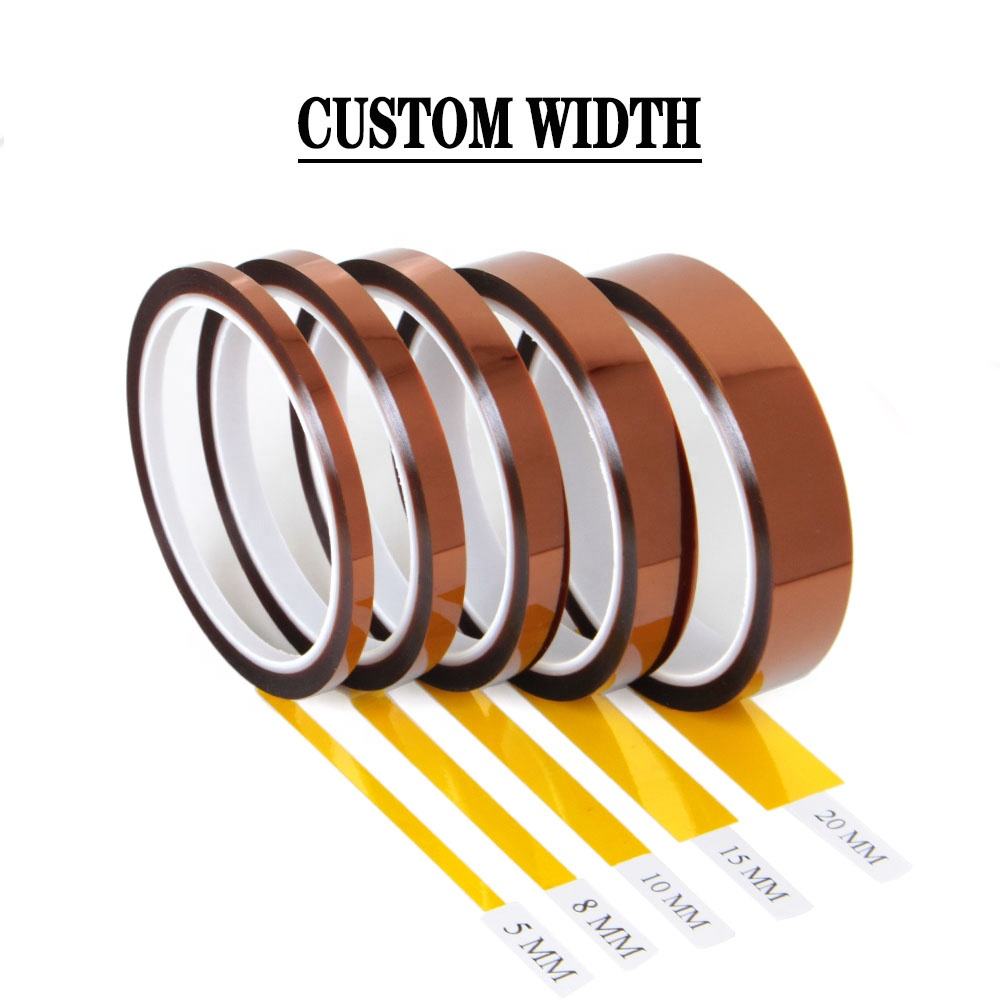
- Thickness Gradients: 15μm to 75μm films tailored to specific fold radii.
- Die-Cut Precision: Laser-cutting accuracy ±15μm for microvia protection.
- Surface Functionalization: Custom primers for difficult adhesion surfaces (e.g., PTFE-treated metals).
2. Industry Certifications
- AEC-Q200 Compliance: Vibration resistance up to 20G (MIL-STD-810G).
- UL510 Flammability: V-0 rating at 0.3mm thickness.
- REACH/ROHS 3.0: Zero halogens, phthalates, or restricted metals.
Third-Party Validation: SGS tested our tape for 500hr QUV exposure—zero blistering or delamination.
Cost-Efficiency Without Compromise
While standard FPC tapes cost 0.12/m2,ourhigh−performanceversionsarepricedat0.18/m²—delivering ROI through:
- 30% Lower Defect Rates: Reduced rework in SMT lines.
- Extended Product Lifespan: 5-year MTBF vs. industry average of 2.5 years.
- Process Savings: Eliminates lamination steps via direct die-attaching capability.
How to Choose the Right FPC Tape
- Define Operational Limits: Temperature range, bend radius, and EMI requirements.
- Test Under Real Conditions: Request sample kits for in-house thermal cycling and vibration tests.
- Audit Suppliers: Ensure ISO 9001 certification and in-house IPC-TM-650 labs.
Conclusion
In FPC manufacturing, generic PET tapes compromise reliability. Our premium PET tapes for FPC bonding are engineered for extremes—delivering unmatched performance in automotive, medical, and aerospace applications. By combining material innovation with rigorous testing, we empower engineers to push design boundaries without sacrificing durability.
Actionable Next Steps:
- Download our FPC Tape Selection Guide (includes SMT process parameters).
- Request AQL 0.65 inspection reports for your specific application.
- Schedule a consultation with our application engineers to optimize tape selection.
Tape for OLED Display: Revolutionizing Flexible Screen Manufacturing with Premium PET Adhesives
Field-Proven Strategies: Optimizing PCB Gold Finger Performance with High-Temperature PET Tapes


Need help choosing the right industrial tape?
Send us your application details, including temperature, surface material, size, quantity and current problem. Our team will help recommend a suitable tape material or custom die-cut solution.

simon@jiaotaotao.com


+86-136 1277 5969


+86-136 1277 5969
