
High Temperature Tape OEM China
High Temperature Tape OEM China: Custom Heat Resistant Tape Manufacturing
High temperature tape OEM is an important sourcing option for industrial companies, distributors, importers and manufacturers that need adhesive tape with customized specifications. Instead of purchasing standard retail rolls, OEM customers can work with a manufacturer to define the backing material, adhesive system, thickness, width, roll length, core size, packaging and other technical requirements.
High temperature adhesive tape is used in electronics, PCB manufacturing, electrical insulation, battery production, automotive components, powder coating, thermal transfer, transformers, motors and other industrial processes. Different applications require different combinations of temperature resistance, adhesion, electrical insulation, dimensional stability and chemical resistance.
For B2B buyers, the goal of an OEM project is not simply to purchase a heat resistant tape. It is to develop a repeatable tape specification that can be manufactured consistently for samples, trial orders and long-term production.
What Is High Temperature Tape OEM?
High temperature tape OEM refers to the production of heat resistant adhesive tape according to the customer's requirements. The customer may provide an existing specification, sample, drawing or application requirement, while the manufacturer develops or adjusts the tape construction for production.
An OEM high temperature tape project may involve:
- Backing material selection
- Adhesive selection
- Film thickness
- Adhesive thickness
- Total tape thickness
- Custom width
- Custom roll length
- Core diameter
- Color
- Slitting
- Die cutting
- OEM labeling
- Private label packaging
- Carton specifications
This makes OEM manufacturing particularly suitable for companies that sell industrial tape under their own brand or require a tape that fits a specific production process.
Why Choose High Temperature Tape OEM From China?
China has an established adhesive tape manufacturing supply chain covering film substrates, adhesive formulation, coating, laminating, slitting, rewinding, die cutting and packaging. This allows B2B buyers to source customized tape products from manufacturers with different levels of production and converting capability.
1. Flexible Product Customization
OEM manufacturing allows buyers to specify tape dimensions and performance requirements instead of relying entirely on standard market sizes.
For example, a customer may require a 10 mm wide polyimide tape instead of a standard 25 mm roll, or a specific PET tape thickness for electrical insulation. The manufacturer can evaluate whether the requested construction can be produced consistently.
2. Private Label Manufacturing
Distributors and industrial brands can use OEM manufacturing to sell high temperature adhesive tape under their own brand name. Packaging can be customized with company logos, product names, specifications, barcodes and other required information.
3. Competitive Production Costs
Direct factory sourcing can reduce unnecessary distribution layers, especially for recurring industrial orders. However, buyers should compare the complete supply cost rather than focusing only on the price per roll.
4. Custom Converting
Industrial customers may require narrow-width slitting, jumbo rolls or die-cut components. A manufacturer with converting equipment can adapt the tape to the customer's production requirements.
5. Long-Term Supply
Once an OEM tape has passed application testing, the customer can establish a defined specification for repeat orders. This can make long-term purchasing more consistent than repeatedly sourcing different standard products.
High Temperature Tape Materials Available for OEM
The backing material is one of the most important decisions in a high temperature tape OEM project. Different substrates provide different combinations of heat resistance, mechanical strength, electrical insulation and chemical resistance.
| Backing Material | Key Characteristics | Typical OEM Applications |
|---|---|---|
| Polyimide Film | High temperature resistance, electrical insulation, dimensional stability | PCB masking, soldering, electronics, batteries and electrical insulation |
| Polyester PET Film | Dimensional stability, insulation and balanced mechanical performance | Transformers, motors, coils, electronics and industrial masking |
| PTFE | Low friction, non-stick characteristics and chemical resistance | Heat sealing, industrial processing and release applications |
| Fiberglass | High tensile strength and heat resistance | Electrical insulation, reinforcement and industrial bundling |
| Specialty Films | Application-specific thermal or electrical performance | Specialized industrial applications |
The correct substrate should be selected according to the actual process conditions. A tape intended for short-term thermal masking may require a different construction from a tape that remains under continuous heat exposure.
Polyimide Tape OEM for High Temperature Applications
Polyimide tape is one of the most common materials considered for high temperature tape OEM projects. It combines a polyimide film backing with an adhesive system selected according to the application.
Polyimide tape can be used in:
- PCB soldering and masking
- Wave soldering processes
- Reflow-related masking applications
- Electrical insulation
- Battery component protection
- Transformer and motor insulation
- Thermal transfer applications
- Powder coating masking
- Electronics assembly
OEM buyers may specify different film thicknesses, adhesive levels, widths and roll lengths depending on the application.
For example, an electronics manufacturer may require a thin polyimide tape for precise masking, while an electrical insulation application may require a different thickness and dielectric performance.
PET High Temperature Tape OEM
Polyester PET tape is another important product category for OEM manufacturing. PET film provides good dimensional stability and can be combined with silicone or acrylic adhesive systems for different industrial requirements.
PET high temperature tape can be used for:
- Electrical insulation
- Transformer and motor manufacturing
- Coil wrapping
- PCB and electronics masking
- Powder coating
- Component protection
- Industrial bundling
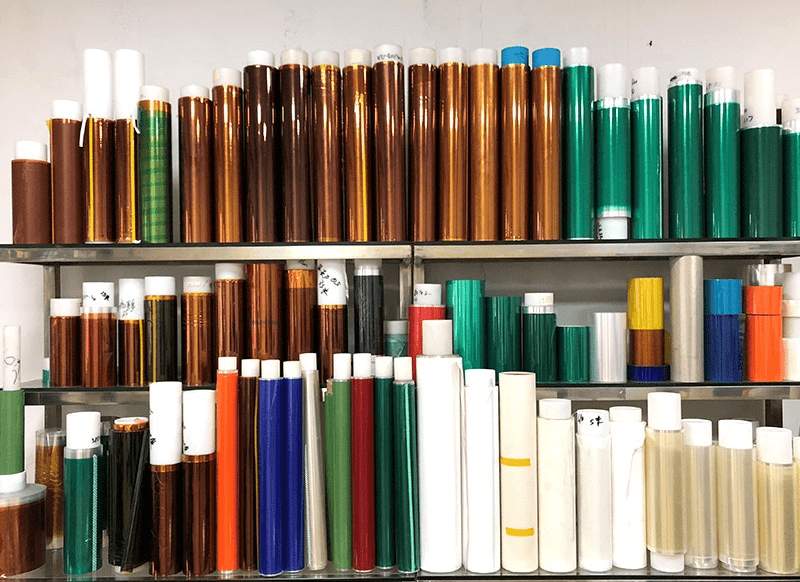
For OEM applications, customers can specify the PET film thickness, adhesive type, color, width and roll length. Green PET masking tape is also commonly used in industrial coating and masking processes.
Choosing the Adhesive for High Temperature Tape OEM
The adhesive system is just as important as the backing material. A high temperature tape may use silicone, acrylic or another specialty adhesive depending on the required application performance.
Silicone Adhesive
Silicone adhesive is frequently selected for high temperature applications because it can maintain adhesion across a broad operating range. It is commonly paired with polyimide and PET films.
Silicone adhesive can be suitable when the application requires thermal stability, electrical insulation and reliable adhesion during heating cycles.
Acrylic Adhesive
Acrylic adhesive can provide strong adhesion and good aging resistance for many industrial applications. It can be suitable for PET-based industrial tapes and applications where balanced adhesion and environmental performance are required.
Application-Specific Adhesive Selection
There is no single adhesive that is ideal for every high temperature application. The manufacturer should consider the substrate, operating temperature, dwell time, surface energy, removal requirements and required bond strength before recommending an adhesive.
High Temperature Tape OEM Customization Options
A major advantage of OEM production is the ability to customize the tape around the customer's application and sales requirements.
Custom Width
OEM manufacturers can convert jumbo rolls into narrow widths according to the customer's application or dispensing equipment.
Custom Length
Roll length can be adjusted according to production requirements, packaging limitations or customer specifications.
Custom Thickness
Film thickness and adhesive thickness can influence insulation, conformability, adhesion and mechanical properties.
Custom Core Size
Different dispensers and automated equipment may require different core diameters or winding configurations.
Custom Color
Depending on the material, OEM tape can be produced in different colors for product identification, process separation or branding.
Custom Die Cutting
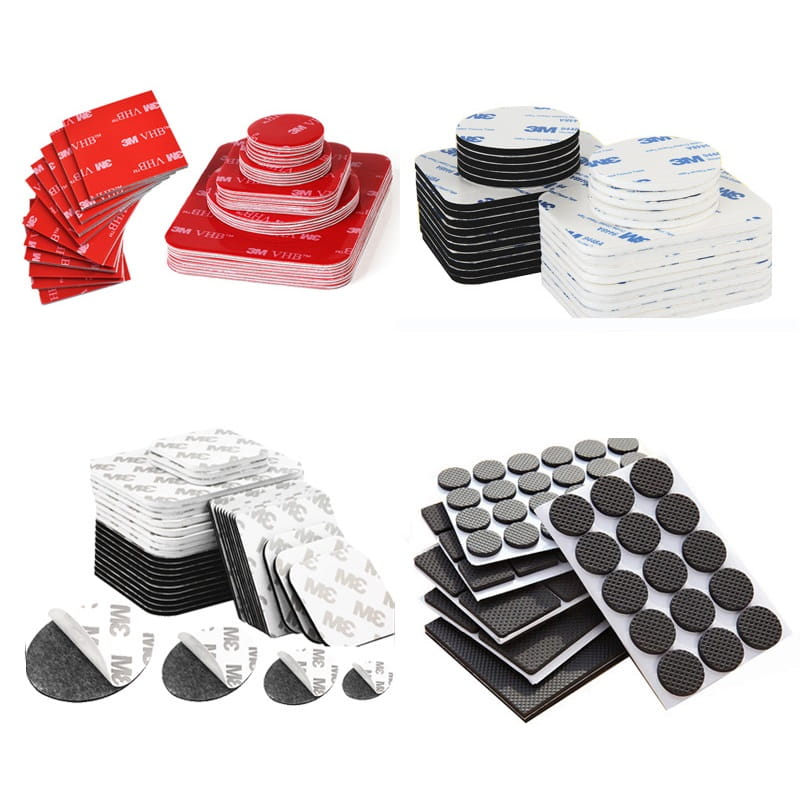
Instead of supplying tape only in rolls, OEM manufacturers may convert adhesive tape into discs, strips, rectangles, rings or application-specific shapes.
Custom Packaging
Private label customers can request customized individual packaging, labels, boxes, cartons, barcodes and product identification.
High Temperature Tape OEM vs. ODM
OEM and ODM are related but different manufacturing models.
| Feature | OEM | ODM |
|---|---|---|
| Customer Specification | Customer usually provides specifications or requirements | Manufacturer may propose the product design |
| Product Development | Based mainly on customer's requirements | Manufacturer contributes more technical development |
| Branding | Customer's brand can be applied | Customer can also use private labeling |
| Customization | High | High |
| Best For | Established specifications and private label products | Customers needing technical product development |
For buyers who already have an existing tape specification or sample, OEM manufacturing is usually the more direct model. For customers who know the application but do not know the exact tape construction, an ODM-style development process may be more appropriate.
Private Label High Temperature Tape OEM
Private label manufacturing allows distributors, wholesalers and industrial brands to purchase high temperature tape from a manufacturer and sell the finished product under their own brand.
A private label OEM program can include:
- Brand logo
- Product name
- Technical specifications
- Custom labels
- Individual roll packaging
- Printed boxes
- Master cartons
- Barcodes
- Product codes
- Custom instruction sheets
This model is useful for distributors that want to build their own industrial tape product line without investing in coating and converting equipment.
High Temperature Tape OEM Applications
PCB and Electronics
High temperature polyimide tape is widely used for masking and insulation in electronics manufacturing. OEM specifications can be developed around PCB processing conditions, required dimensions and removal performance.
Battery Manufacturing
High temperature adhesive tapes may be used for insulation, component protection, wrapping and temporary fixation in battery production.
Electrical Insulation
PET and polyimide tapes can be customized for transformer, motor, coil and other electrical insulation applications.
Powder Coating
High temperature masking tapes can protect selected areas during powder coating and thermal curing processes. Clean removal and resistance to the curing conditions are important factors.
Thermal Transfer
Heat resistant adhesive tape can temporarily hold transfer films, substrates or components in position during thermal processing.
Automotive Components
Specialty high temperature tapes can be used for component protection, insulation, masking and temporary fixation in automotive manufacturing.
How to Start a High Temperature Tape OEM Project
Step 1: Define the Application
Tell the manufacturer exactly where the tape will be used and what manufacturing process it must withstand.
Step 2: Provide the Existing Specification
If you already use a tape, provide its technical datasheet, dimensions or sample. This gives the manufacturer a reference for product matching.
Step 3: Define the Temperature Requirement
Specify both continuous operating temperature and short-term peak temperature whenever possible. Exposure time is also important.
Step 4: Confirm Tape Dimensions
Provide thickness, width, length, core size and winding direction if required.
Step 5: Request Samples
Samples should be tested under actual production conditions before mass production.
Step 6: Confirm OEM Packaging
For private label projects, confirm the artwork, label information, carton configuration and packaging requirements before production.
Step 7: Approve the Production Specification
Once testing is completed, establish the final technical specification and quality requirements for repeat orders.
What Information Should Be Included in an OEM RFQ?
| Requirement | Example Information |
|---|---|
| Material | Polyimide, PET, PTFE, fiberglass or other substrate |
| Adhesive | Silicone, acrylic or required adhesive system |
| Thickness | Required film and total thickness |
| Width | Custom width in mm or inch |
| Length | Required meters or feet per roll |
| Temperature | Continuous and peak temperature |
| Application | PCB masking, insulation, battery, powder coating, etc. |
| Substrate | PCB, metal, plastic, glass, painted surface, etc. |
| Quantity | Sample, trial order and annual volume |
| Packaging | Neutral, OEM or private label |
| Die Cutting | Roll, strip, disc or custom shape |
The more complete the RFQ is, the easier it is for the manufacturer to recommend a suitable construction and provide an accurate quotation.
Quality Control for OEM High Temperature Tape
Quality consistency is critical for OEM industrial tape. The same tape specification should provide predictable performance from sample production through repeated bulk orders.
Depending on the product, quality control may include:
- Raw material inspection
- Film thickness inspection
- Adhesive coating control
- Total thickness measurement
- Width tolerance inspection
- Roll length verification
- Adhesion testing
- Peel strength testing
- Tensile strength testing
- Temperature performance testing
- Electrical insulation testing where applicable
- Visual inspection
- Packaging inspection
For long-term OEM programs, buyers should establish acceptable tolerances and testing requirements before mass production.
Why Sample Testing Is Important Before Mass Production
A tape specification that looks suitable on paper may perform differently under actual manufacturing conditions. The substrate, pressure, temperature, exposure time and application method can all influence adhesive performance.
Before approving an OEM product, customers should test:
- Initial adhesion
- Peel strength
- Holding power
- High temperature resistance
- Clean removal
- Adhesive residue
- Electrical insulation where required
- Dimensional stability
- Performance after heating and cooling cycles
Application testing helps both the buyer and manufacturer identify potential issues before the product enters regular production.
How to Choose a High Temperature Tape OEM Manufacturer in China
Not every tape supplier has the same OEM capabilities. Buyers should evaluate the manufacturer's ability to control the entire production and converting process.
Production Capability
Check whether the supplier has coating, slitting, rewinding, laminating, die-cutting and packaging capabilities appropriate for the project.
Technical Support
A strong OEM supplier should be able to discuss material selection, adhesive performance, temperature requirements and application conditions.
Customization
Confirm whether the manufacturer can consistently produce the requested width, thickness, length, adhesive construction and packaging.
Quality Management
Ask how raw materials, coating, slitting, finished rolls and packaging are inspected.
Production Capacity
Make sure the supplier can support both the initial order and expected future volume.
Sample Service
A reliable OEM process should allow customers to evaluate samples before committing to large-scale production.
JIAO TAO TAO TAPE High Temperature Tape OEM
JIAO TAO TAO TAPE provides industrial adhesive tape solutions for B2B customers looking for customized tape products from China. The product range includes high temperature polyimide tape, polyester PET tape and other specialty industrial adhesive tapes.
OEM projects can be developed around application requirements such as tape material, adhesive type, thickness, width, roll length, packaging and converting requirements.
The tapes can be used across electronics, PCB manufacturing, electrical insulation, battery manufacturing, thermal transfer, powder coating and other industrial applications.
For customers who already have an existing tape sample or specification, the OEM process can begin with product evaluation and sample matching. For customers without a defined tape specification, application information can be used to determine a suitable material and adhesive construction.
Frequently Asked Questions About High Temperature Tape OEM
What does high temperature tape OEM mean?
High temperature tape OEM means that a manufacturer produces heat resistant adhesive tape according to a customer's requirements, including material, adhesive, dimensions, packaging and other specifications.
Can I customize polyimide high temperature tape?
Yes. Depending on the manufacturer's capabilities, polyimide tape can be customized in thickness, width, length, adhesive system, core size, packaging, slitting and die-cut format.
What materials can be used for high temperature tape OEM?
Common materials include polyimide film, polyester PET film, PTFE, fiberglass and other specialty substrates. The appropriate material depends on the application's thermal, electrical, chemical and mechanical requirements.
Can I put my own brand on high temperature tape?
Yes. Private label OEM programs can include customized labels, boxes, cartons, product codes and other packaging requirements.
Can high temperature tape be die cut?
Yes. Depending on the construction and production equipment, adhesive tape can be converted into custom strips, discs, rectangles, rings and other application-specific shapes.
What MOQ is required for high temperature tape OEM?
MOQ depends on the material, dimensions, adhesive system, packaging and customization requirements. Standard products may have different MOQ requirements from fully customized OEM products.
How do I request an OEM quotation?
Provide the tape material, thickness, width, length, adhesive type, operating temperature, application, substrate, quantity and packaging requirements. An existing tape sample, drawing or technical datasheet can further improve quotation accuracy.
Conclusion: Build a Custom High Temperature Tape OEM Program
High temperature tape OEM is a practical solution for industrial buyers that need customized adhesive tape rather than standard retail products. By defining the backing material, adhesive system, thickness, dimensions, temperature requirements and packaging, customers can develop a tape specification that matches their application.
Polyimide and PET are two common materials for high temperature industrial tape, while PTFE, fiberglass and specialty substrates can be considered for applications requiring different thermal, mechanical or chemical properties.
A successful OEM project should include application analysis, material selection, sample testing, specification approval, quality control and repeatable mass production. Choosing a manufacturer with suitable coating and converting capabilities is essential for maintaining consistent quality.
Looking for high temperature tape OEM in China? Send your required material, size, temperature, application and quantity to JIAO TAO TAO TAPE for product recommendations, samples and customized OEM solutions.
Industrial Tape Manufacturer China | JIAOTAOTAO TAPE
Related Article

Need help choosing the right industrial tape?
Send us your application details, including temperature, surface material, size, quantity and current problem. Our team will help recommend a suitable tape material or custom die-cut solution.

simon@jiaotaotao.com


+86-136 1277 5969

+86-136 1277 5969
